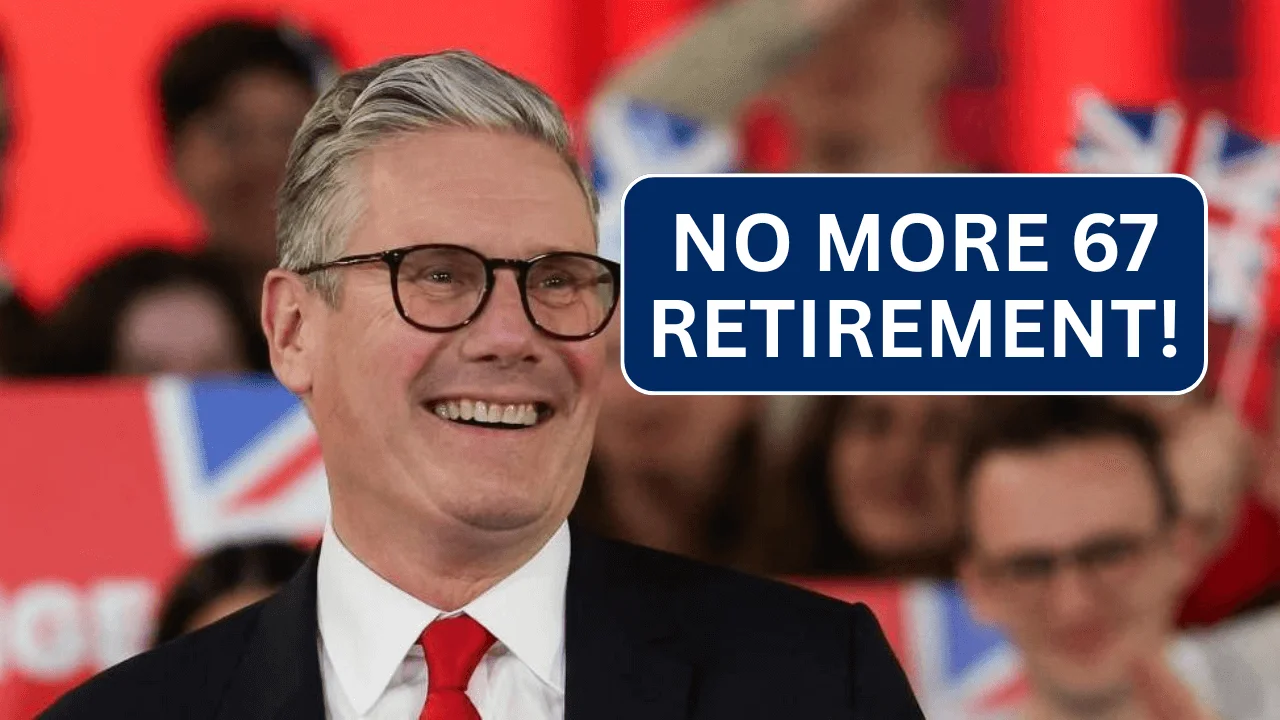
For years, many people across Britain planned their retirement around one widely recognised milestone: age 67. It became the point at which millions expected to receive their State Pension and, for many, step back from full‑time work.
Now, that benchmark is changing.
The UK Government has officially approved plans that move beyond what many referred to as the “67 rule.” While changes to the State Pension age have been gradual over the past decade, this latest confirmation signals a clear shift in long‑term retirement planning.
So what does this actually mean? Who is affected? And how should you prepare if retirement still feels some way off?
Here’s a clear, practical guide to the new State Pension age and what it means for UK workers and future retirees.
What Was the ‘67 Rule’
The ‘67 rule’ refers to the phased increase in the State Pension age to 67 for both men and women.
The State Pension age has been gradually rising over time. Historically, women could claim at 60 and men at 65. Equalisation and further reforms pushed the age higher in stages.
The move to 67 was legislated years ago, but many people still mentally anchored retirement planning around that age.
Now, however, the Government has approved the next stage of reform — meaning 67 will no longer be the long‑term benchmark.
What Is the New Approved Pension Age
Under current legislation, the State Pension age is scheduled to rise to 68.
While the exact timing depends on final review implementation, the principle is clear: future retirees should expect to reach State Pension age later than 67.
The decision follows periodic reviews linking pension age to life expectancy and economic sustainability.
The Department for Work and Pensions oversees these changes and administers pension policy.
Why the Pension Age Is Increasing
There are two main reasons behind the shift:
People are living longer
Public finances face long‑term pressure
When the State Pension was first introduced, average life expectancy after retirement was significantly lower than it is today.
As lifespans increase, pension payments are made for longer periods. Raising the pension age spreads the cost across more working years and helps manage long‑term affordability.
Who Will Be Affected
The biggest impact will fall on:
People currently under 55
Mid‑career workers
Younger generations entering the workforce
If you are already close to retirement, your qualifying age is unlikely to change significantly.
However, workers in their 30s and 40s should plan on the basis that State Pension age 68 — or potentially higher in future — may apply to them.
Does This Mean You Must Work Until 68
Not necessarily.
The State Pension age determines when you can begin receiving your State Pension. It does not legally require you to remain in employment until that age.
If you have sufficient private savings or workplace pension income, you can choose to retire earlier.
However, you would not receive your State Pension until you reach the official qualifying age.
The Difference Between Retirement Age and Pension Age
Many people use “retirement age” and “State Pension age” interchangeably, but they are not the same.
Retirement age is a personal decision.
State Pension age is a legal eligibility threshold.
For example, someone may stop working at 65 but wait until 68 to receive their State Pension.
Understanding that distinction is important when planning finances.
What Happens to the Triple Lock
The triple lock policy ensures the State Pension increases annually by the highest of:
Inflation
Average earnings growth
2.5%
While this affects the amount pensioners receive, it does not determine the age at which payments begin.
The age increase and the triple lock are separate policy mechanisms.
Financial Impact on Workers
A later State Pension age means individuals may need to:
Work longer
Increase pension contributions
Boost private savings
Delay drawing retirement income
For someone expecting to receive the State Pension at 67, even a one‑year delay can affect financial planning significantly.
It may require bridging income from private pensions or savings.
Impact on Low‑Income Workers
Rising pension ages can be particularly challenging for those in physically demanding roles.
Construction workers, carers, and manual labourers may find extended working years more difficult than office‑based employees.
Policy discussions often consider these factors, but the State Pension age applies broadly across the population.
Support schemes such as Pension Credit remain available only after reaching State Pension age.
Why the Government Says This Is Necessary
The UK faces a demographic shift:
An ageing population
Fewer workers per pensioner
Longer average lifespans
Without changes, pension spending would increase sharply as a share of public expenditure.
Raising the pension age is presented as a way to maintain system sustainability without dramatically increasing taxes.
Could the Pension Age Rise Again
Future increases are possible.
Regular reviews assess:
Life expectancy trends
Economic conditions
Fiscal sustainability
However, pension age changes are typically announced years in advance to give individuals time to adjust.
Sudden, short‑notice increases are unlikely.
How to Check Your Own Pension Age
Rather than relying on headlines, individuals should check their personal State Pension age using official government tools.
This provides:
Your exact qualifying date
Estimated weekly payment
National Insurance record summary
Planning based on your specific date is more reliable than general assumptions.
What You Should Do Now
If retirement is still years away, consider:
Reviewing workplace pension contributions
Checking your National Insurance record
Filling gaps where necessary
Increasing long‑term savings gradually
Small increases in contributions over decades can significantly improve retirement security.
Common Questions
Is 67 completely abolished
No, some individuals will still reach State Pension age at 67 depending on birth date.
Is 68 now confirmed for everyone
Legislation sets out plans for 68, with timing dependent on review outcomes.
Can I access my State Pension early
No, early access is not permitted under current rules.
Does this affect private pension access
Private pension access ages are separate, though they may also rise in future.
Real‑World Example
Imagine someone aged 45 today who expected to receive their State Pension at 67.
If their qualifying age shifts to 68, they must fund one additional year without State Pension income.
If they receive around £11,000 per year from the State Pension, that represents a significant adjustment.
Planning early helps manage that difference smoothly.
The Bigger Picture
The State Pension remains a central pillar of retirement income in the UK.
However, it is increasingly viewed as a foundation rather than a complete income solution.
Workplace pensions and private savings play a growing role.
The move beyond the ‘67 rule’ reinforces the need for diversified retirement planning.
Key Points to Remember
The State Pension age is rising beyond 67.
The next planned stage moves toward 68.
You can retire before State Pension age, but payments start at eligibility.
Changes are announced well in advance.
Planning early reduces financial pressure later.
Final Thoughts
The end of the so‑called ‘67 rule’ marks another step in the long evolution of the UK’s retirement system. While change can feel unsettling, it has been introduced gradually, with the aim of reflecting longer life expectancy and maintaining financial sustainability.
For younger workers especially, retirement planning must adapt to the reality that State Pension age may continue to shift over time.
The good news is that early awareness provides flexibility. By reviewing contributions, increasing savings where possible, and understanding your specific eligibility date, you can remain in control of your long‑term plans.
Retirement may no longer begin at a single, fixed age — but with careful preparation, it can still be secure, stable and rewarding.