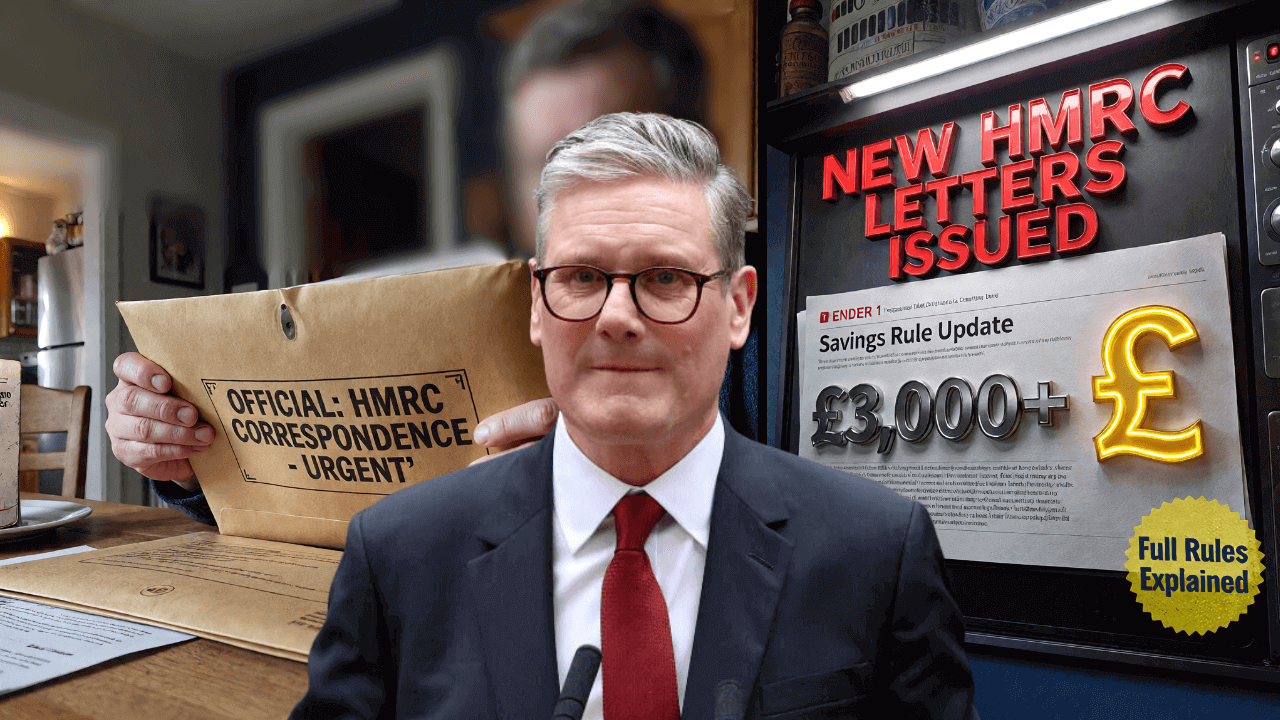
Thousands of pensioners across the UK are beginning to receive updated tax notices following confirmation from HM Revenue and Customs that new monitoring thresholds now apply to certain savings levels. If you have £3,000 or more in savings, you may receive communication from HMRC explaining how interest, tax codes or reporting requirements apply to you.
Understandably, many older people are worried that having modest savings could suddenly trigger penalties or extra tax bills. The good news is that simply holding £3,000 in savings does not automatically mean you owe more tax. However, changes to interest reporting, personal allowances and tax code adjustments mean some pensioners may receive updated notices.
Here is a clear and practical explanation of what the new notices mean, who is affected and what you should do if a letter arrives.
What Has HMRC Confirmed
HM Revenue and Customs has confirmed that updated data‑sharing systems with banks and building societies are being used to review interest earned on savings accounts more efficiently.
This means:
Banks automatically report interest earned
HMRC cross‑checks this against declared income
Tax codes may be adjusted if necessary
The £3,000 figure relates to savings balances that may generate taxable interest depending on current rates, not to a savings tax itself.
There is no new “£3,000 savings tax”. The focus is on interest earned.
Why Pensioners Are Receiving Notices
Many pensioners rely on a combination of:
State Pension
Workplace or private pensions
Savings interest
In recent years, higher interest rates have increased returns on even modest savings accounts.
For example, £3,000 earning 5% interest would generate £150 annually. Larger savings generate more.
If total taxable income exceeds personal allowances, interest may become partially taxable.
HMRC is now issuing clearer notices to ensure pensioners understand how savings interest interacts with tax thresholds.
Understanding the Personal Savings Allowance
The Personal Savings Allowance allows most basic rate taxpayers to earn up to £1,000 in interest tax‑free each year.
Higher rate taxpayers can earn £500 tax‑free.
Additional rate taxpayers receive no allowance.
Many pensioners fall within the basic rate band and therefore pay no tax on savings interest below £1,000 annually.
The key issue is not how much you have saved, but how much interest you earn.
The £3,000 Savings Threshold Explained
The £3,000 reference is often misunderstood.
There is no rule stating that £3,000 automatically triggers tax.
However, HMRC’s updated monitoring may generate automated checks where:
Savings balances exceed modest levels
Interest pushes total income close to the tax threshold
Tax codes require adjustment
The threshold may be used as an administrative trigger point for reviewing interest income rather than imposing tax.
How Tax Codes May Change
If HMRC believes you owe tax on savings interest, they may adjust your tax code rather than sending a separate bill.
For pensioners, this could mean:
A slight reduction in net private pension payments
A small adjustment applied across the tax year
A letter explaining a revised tax code
Your State Pension itself is taxable but paid without tax deducted. Adjustments are usually applied through other pension income.
Will Everyone With £3,000+ Savings Be Taxed
No.
Whether you pay tax depends on:
Your total annual income
Your personal allowance
Your savings interest earned
Your tax band
Many pensioners remain within the personal allowance and owe no additional tax.
The notice may simply be informational.
Why Interest Income Matters More Now
Interest rates have risen significantly compared to previous years when savings generated very little return.
This means pensioners who previously earned negligible interest may now earn enough to:
Exceed the Personal Savings Allowance
Push total income into taxable territory
Trigger a tax code adjustment
Even so, any tax due is typically proportional to interest earned.
Common Concerns
Some pensioners worry that savings could affect benefits.
Savings do not affect State Pension entitlement.
However, means‑tested benefits such as Pension Credit can be influenced by capital levels.
For Pension Credit:
Savings over £10,000 may reduce entitlement gradually
There is no upper savings cap, but income assumptions apply
The £3,000 figure does not relate to Pension Credit rules.
What To Do If You Receive a Notice
If a letter arrives from HMRC:
Read it carefully
Check the interest figures listed
Compare with your bank statements
Ensure income details are accurate
If you believe the figures are incorrect, you can contact HMRC directly for clarification.
Do not ignore official correspondence.
Avoiding Scams
Tax notices often trigger scam attempts.
Remember:
HMRC does not ask for bank details via text message
You will not be asked to click random links for refunds
Official letters reference your tax code or National Insurance number
If unsure, contact HMRC using official GOV.UK contact details.
How This Affects Joint Accounts
Interest from joint accounts is usually split evenly between account holders unless specified otherwise.
If you share savings with a spouse or partner, only your portion of interest is counted towards your tax calculation.
This can reduce potential tax exposure.
Fixed‑Rate Bonds and ISA Accounts
Interest earned in an Individual Savings Account (ISA) is tax‑free and does not count toward your Personal Savings Allowance.
If your savings are held in cash ISAs, you are unlikely to face tax on that interest.
Fixed‑rate bonds outside an ISA wrapper, however, do count.
Planning Ahead
If your savings are growing, consider:
Using ISA allowances
Spreading savings between partners
Monitoring annual interest
Reviewing your tax code annually
Simple planning can prevent unexpected adjustments.
Does This Affect Winter Fuel or Other Payments
Tax notices relating to savings interest do not affect:
Winter Fuel Payment
Cost‑of‑living payments
Attendance Allowance
Those are separate from HMRC savings monitoring.
Why HMRC Is Increasing Transparency
Data‑sharing between financial institutions and HMRC has improved significantly.
The aim is to:
Reduce under‑reporting
Improve fairness
Minimise surprise tax bills
Ensure accurate tax codes
For most pensioners, this simply results in clearer communication.
Common Questions
Is £3,000 in savings taxable
No, only interest earned may be taxable.
Will I get fined
Not if your income is correctly reported.
Does this affect my State Pension
No, your pension entitlement remains unchanged.
Do I need to declare interest manually
Most banks report interest automatically to HMRC.
Key Points to Remember
There is no new tax on having £3,000 saved.
Interest earned determines tax liability.
Most basic rate pensioners remain within allowances.
HMRC may adjust tax codes instead of issuing bills.
Always verify official correspondence carefully.
Final Thoughts
The confirmation of new HMRC notices for pensioners with £3,000 or more in savings reflects improved monitoring of interest income rather than the introduction of a new savings tax.
For many pensioners, the letter will simply explain how interest is treated within the existing tax system. Others may see small adjustments to their tax code if total income exceeds allowances.
The most important thing is not to panic. Having savings is not a problem. Understanding how interest interacts with tax thresholds ensures you remain informed and in control.
If you are unsure about your situation, reviewing your tax code or speaking directly with HMRC can provide reassurance.
In short, this update is about clarity — not punishment — and for most pensioners, the impact will be minimal.