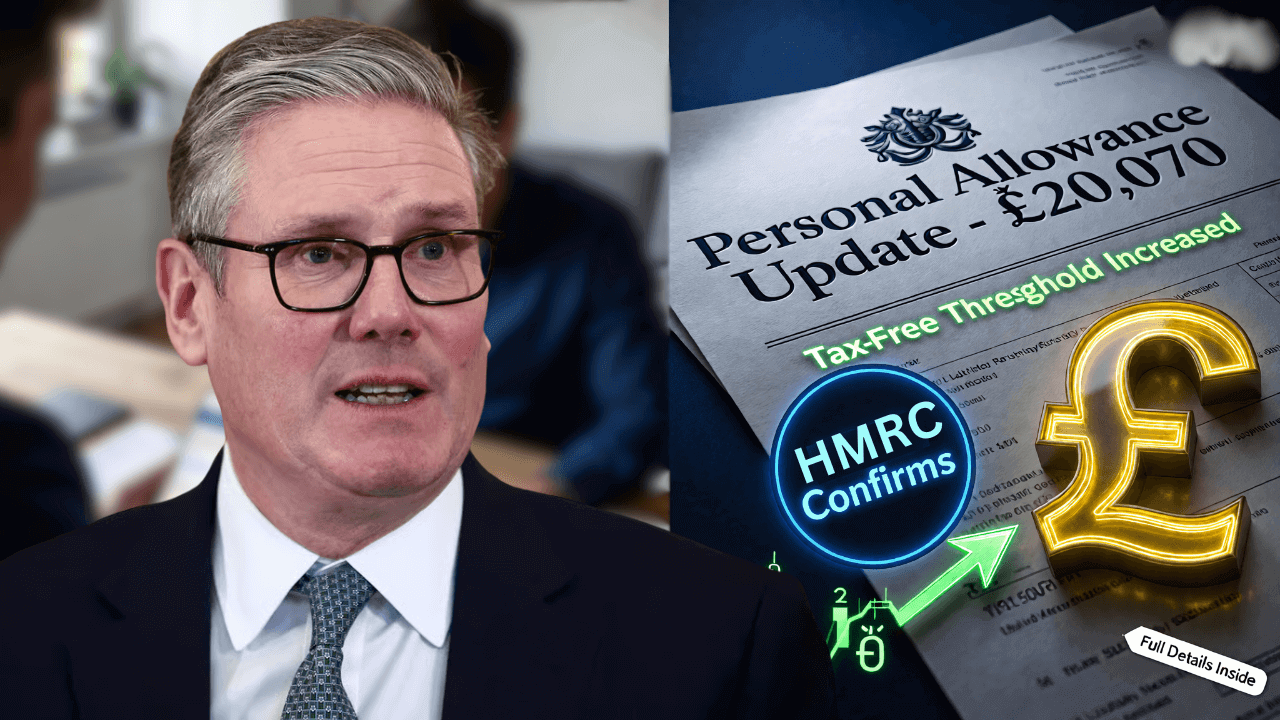
A confirmed rise in the UK’s tax‑free Personal Allowance to £20,070 has sparked widespread interest among workers, pensioners and self‑employed individuals alike. For many households, even a modest shift in tax thresholds can make a noticeable difference to monthly budgets.
With living costs still stretching incomes across the country, any change to income tax allowances is closely watched. The Personal Allowance determines how much you can earn before paying income tax — so when it increases, take‑home pay can rise without needing a pay increase.
Here’s a clear, practical and easy‑to‑understand breakdown of what the £20,070 allowance means, who benefits, how it affects pensions and wages, and what you should expect next.
What Is the Personal Allowance
The Personal Allowance is the amount of income you can earn each tax year before paying income tax.
It applies to most UK taxpayers and covers income such as:
Employment wages
Private pensions
Self‑employment profits
Certain benefits
The allowance is administered by HM Revenue and Customs.
Once your income exceeds the allowance, income tax applies at the relevant rate.
What Does the £20,070 Increase Mean
A rise to £20,070 means that the first £20,070 of your annual income would be tax‑free.
For someone earning above this level, it reduces the amount of income subject to tax.
For example:
If you earn £25,000 per year, previously a larger portion may have been taxable.
With a £20,070 allowance, only income above that figure is taxed.
At the basic 20% tax rate, every additional £1,000 of tax‑free allowance could mean £200 saved annually.
Who Benefits Most
The biggest impact is felt by:
Low‑to‑middle income workers
Part‑time employees
Pensioners with modest private pensions
Self‑employed individuals earning above the allowance
Higher earners may see proportionally smaller overall savings relative to total income, but still benefit from the increased threshold.
How It Affects Basic Rate Taxpayers
Most UK taxpayers fall into the basic rate band.
If you pay 20% income tax, raising the allowance reduces the portion of your income taxed at that rate.
For example:
Someone earning £30,000 annually would only pay tax on £9,930 instead of a higher figure under a lower allowance.
This could translate to hundreds of pounds per year in savings.
Impact on Pensioners
The State Pension itself counts as taxable income, though it is paid without tax deducted at source.
If your combined income from State Pension and private pensions remains below £20,070, you would not owe income tax.
For pensioners slightly above that level, the higher allowance reduces the taxable portion.
This may prevent some retirees from drifting into basic rate tax unnecessarily.
Will Tax Codes Change Automatically
Yes.
If the allowance rises officially, tax codes are adjusted automatically by HMRC.
Employees see changes reflected through PAYE (Pay As You Earn).
Pensioners with private pensions may also see tax code updates applied to those payments.
There is no need to submit a separate application.
What About Higher Rate Taxpayers
The Personal Allowance applies to everyone earning below the threshold where it begins to taper.
Once income exceeds £100,000, the allowance reduces gradually.
The £20,070 figure applies fully only up to that taper threshold.
Higher earners still benefit from the increase unless their income triggers allowance reduction.
How This Affects Monthly Take‑Home Pay
Because income tax is deducted throughout the year, a higher allowance usually results in:
Slightly lower monthly tax deductions
Higher net pay
Improved cash flow
Rather than receiving one lump sum, the benefit is spread across pay periods.
Employees may notice small but consistent increases in take‑home pay from April onwards.
Does It Affect National Insurance
No.
The Personal Allowance relates specifically to income tax.
National Insurance contributions have separate thresholds.
Changes to one do not automatically alter the other.
Interaction With Benefits
The Personal Allowance is separate from most benefit eligibility rules.
For example:
Universal Credit entitlement depends on earnings and taper rates rather than tax allowances alone.
Similarly, Pension Credit calculations are based on income and capital assessments, not solely income tax thresholds.
The allowance increase primarily affects tax, not direct benefit entitlement.
Why The Increase Matters Now
With inflation and wage growth affecting household budgets, tax threshold changes play an important role in:
Protecting lower earners
Preventing fiscal drag
Supporting working households
When allowances remain frozen while wages rise, more income becomes taxable — sometimes called “stealth taxation.”
An increase to £20,070 would ease that pressure.
Fiscal Impact
Raising the Personal Allowance reduces government tax revenue.
However, it also leaves more money in household pockets.
Supporters argue it stimulates spending and eases cost‑of‑living pressure.
Critics may question long‑term affordability.
Tax policy always involves balancing revenue with economic support.
Self‑Employed Individuals
If you are self‑employed, the allowance works the same way.
You calculate total profit for the tax year.
The first £20,070 would be tax‑free.
Income above that is taxed according to your tax band.
This could reduce annual tax bills at the point of self‑assessment.
Does Everyone Get the Full Allowance
Most UK residents with standard tax codes do.
However, the allowance can be reduced if:
Your income exceeds £100,000
You claim certain marriage allowances
You have outstanding tax adjustments
Always check your tax code notice to confirm accuracy.
Marriage Allowance
If you transfer part of your allowance to a spouse under the Marriage Allowance scheme, calculations may vary slightly.
However, the underlying increased threshold still applies before transfer adjustments.
Common Questions
Do I need to apply for the new allowance
No, changes are automatic.
When does it start
Personal Allowance changes typically begin at the start of the new tax year in April.
Will pension income be taxed less
If your total income remains under £20,070, no income tax applies.
Does this affect dividend or savings allowances
No, those have separate thresholds.
What You Should Do Now
Check your current tax code.
Review your payslip after April.
Confirm private pension tax deductions are accurate.
Keep records if self‑employed.
If your income is close to the threshold, small adjustments could make a noticeable difference.
Key Points to Remember
The Personal Allowance may rise to £20,070.
It reduces taxable income, not gross income.
Changes apply automatically through PAYE.
State Pension counts toward taxable income.
Higher earners may see tapered benefits.
Final Thoughts
An increase in the tax‑free Personal Allowance to £20,070 would represent meaningful relief for millions of workers and pensioners across the UK. By allowing more income to be earned before tax applies, households retain a greater share of what they earn.
While the exact impact varies depending on individual income levels, the principle remains straightforward: the higher the allowance, the less income subject to tax.
As always, reviewing your tax code and monitoring official HMRC updates ensures you understand how changes apply to your situation.
For many, even incremental improvements in take‑home pay can ease financial pressure — and the rise in the Personal Allowance is designed to do just that.