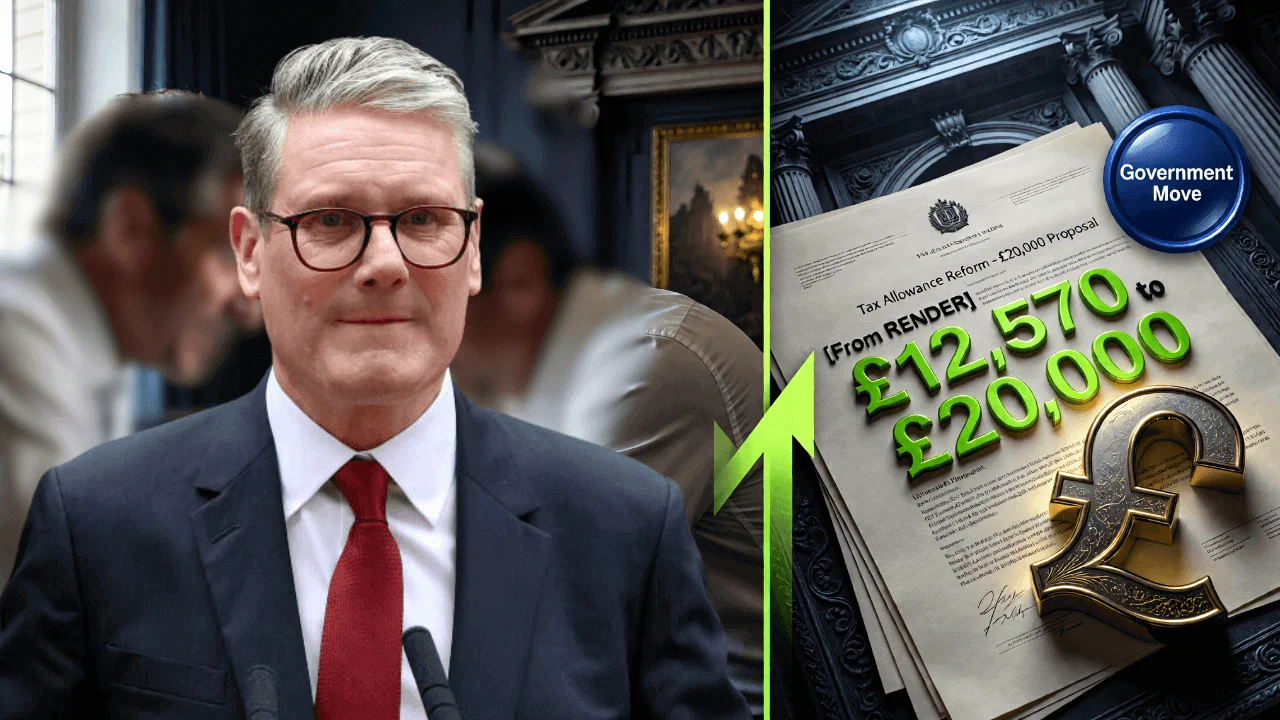
The possibility of the Personal Tax Allowance rising from £12,570 to £20,000 is already generating serious conversation across the UK. For millions of workers, pensioners and self‑employed individuals, such a change would dramatically alter how much income is taxed each year — and how much money stays in your pocket.
At the moment, the Personal Allowance stands at £12,570. This is the amount you can earn before paying income tax. If proposals to raise it to £20,000 move forward, the financial impact would be substantial.
But what would this mean in practice? Who would benefit most? Would everyone gain equally? And is this a confirmed policy or a proposal under consideration?
Here’s a clear, practical guide to what the change could mean for households across the United Kingdom.
What Is the Personal Tax Allowance
The Personal Allowance is the amount of income you can earn each tax year without paying income tax.
It applies to:
Employees
Self‑employed workers
Pensioners
Part‑time workers
The current threshold of £12,570 has been frozen for several years, meaning more people have gradually been pulled into paying tax as wages increase.
Income tax is collected by HM Revenue & Customs and applies once earnings exceed the Personal Allowance.
Why Raising It to £20,000 Is Significant
An increase from £12,570 to £20,000 would mean an additional £7,430 of income becoming tax‑free.
For basic‑rate taxpayers paying 20% income tax, that could represent savings of up to £1,486 per year.
That’s not a minor adjustment — it’s a noticeable boost to take‑home pay.
For someone earning £25,000 per year, the difference could significantly reduce their tax bill.
Who Would Benefit the Most
The biggest gains would go to:
Low and middle earners
Part‑time workers
Pensioners with modest incomes
Dual‑income households
Higher earners would also benefit, though the savings would be proportionally smaller relative to total income.
However, individuals earning below £12,570 already pay no income tax — so they would not see additional benefit unless their income rises above that level.
Impact on Take‑Home Pay
Let’s look at a simple example.
If you currently earn £30,000:
Under a £12,570 allowance, £17,430 is taxable.
Under a £20,000 allowance, only £10,000 would be taxable.
At the basic 20% rate, that could mean roughly £1,486 less income tax paid annually.
For many households, that’s equivalent to covering several months of energy bills or groceries.
What About Pensioners
The State Pension counts as taxable income.
If the Personal Allowance rose to £20,000, many pensioners with modest private pensions might no longer pay income tax at all.
This would be especially helpful for retirees whose total income currently sits just above the £12,570 threshold.
For pensioners receiving only the State Pension, tax may already be minimal or zero — but those with additional income streams could see real savings.
Why the Threshold Has Been Frozen
In recent years, the Personal Allowance has been frozen rather than increased with inflation.
This policy, often referred to as “fiscal drag,” means that as wages rise, more people pay tax even if rates do not change.
Raising the threshold to £20,000 would reverse some of that effect.
However, such a large increase would come at a significant cost to public finances.
What It Would Cost the Treasury
A rise to £20,000 would reduce income tax revenue by billions of pounds per year.
The decision would ultimately be made by HM Treasury during a Budget announcement.
Funding such a move would likely require:
Spending reductions elsewhere
Borrowing increases
Changes to other tax thresholds
Major tax reforms rarely occur in isolation.
Could National Insurance Change Too
Income tax and National Insurance are separate systems.
Even if the Personal Allowance rises to £20,000, National Insurance thresholds may not automatically match.
Employees could therefore still pay National Insurance on earnings below £20,000 depending on policy decisions.
Understanding the difference is important when estimating take‑home pay.
Impact on Self‑Employed Workers
Self‑employed individuals would also benefit from a higher Personal Allowance.
If profits fall below £20,000, income tax liability could fall significantly.
However, Class 4 National Insurance contributions may still apply.
As always, tax obligations depend on total taxable profit.
Effect on Universal Credit and Benefits
For claimants of Universal Credit, higher take‑home pay could slightly reduce benefit entitlement due to taper rules.
However, most working claimants would still be financially better off overall.
Raising the Personal Allowance generally increases disposable income.
Would Higher Earners Lose Out Elsewhere
Some analysts suggest that raising the Personal Allowance could be paired with:
Lower higher‑rate thresholds
Adjusted dividend tax
Changes to capital gains tax
Such balancing measures are common in tax reform.
Until confirmed in legislation, these remain policy possibilities rather than guarantees.
How It Affects Couples and Families
If both partners in a household benefit from the higher allowance, the combined impact could be substantial.
Two basic‑rate earners could collectively save nearly £3,000 per year.
That kind of increase could:
Boost savings
Reduce debt
Offset childcare costs
Improve long‑term financial security
Is This Confirmed Policy
As of now, raising the allowance to £20,000 is a proposal under discussion rather than enacted law.
Tax thresholds are confirmed during formal Budget announcements.
Until legislation is passed, the current £12,570 allowance remains in place.
What You Should Do Now
If the allowance increases:
Check your tax code
Review your payslip
Confirm your employer has applied changes
Adjust budgeting plans
If you are self‑employed, update tax projections accordingly.
Being proactive ensures you capture the full benefit.
Political and Economic Debate
Supporters argue that raising the Personal Allowance:
Rewards work
Helps low earners
Simplifies taxation
Critics argue that:
It reduces government revenue
May benefit higher earners disproportionately
Could require spending cuts elsewhere
Like all tax policy, it involves trade‑offs.
Long‑Term Implications
If implemented, a £20,000 allowance would mark one of the most significant tax changes in recent decades.
It could:
Reduce the number of income taxpayers
Increase disposable income
Reshape work incentives
However, sustainability would depend on economic conditions and public finances.
Common Questions
Would everyone save £1,486
Only basic‑rate taxpayers earning above £20,000 would see the full saving.
Do pensioners benefit
Yes, if total income exceeds the current threshold.
Is this happening immediately
No, changes require formal Budget approval.
Will National Insurance also rise
Not automatically — separate decisions apply.
Key Points to Remember
The current allowance is £12,570.
A rise to £20,000 would significantly reduce tax bills.
Savings could reach nearly £1,500 per year.
National Insurance is separate from income tax.
No formal legislation has yet been passed.
Final Thoughts
The prospect of raising the Personal Tax Allowance from £12,570 to £20,000 is understandably attracting attention across the UK.
For workers and pensioners alike, such a shift would represent a meaningful increase in take‑home income. While not yet confirmed, the proposal highlights ongoing debate about how to balance tax fairness with fiscal responsibility.
If implemented, the change could ease pressure on millions of households — particularly those on modest incomes.
As always, official confirmation will come through a formal Budget statement. Until then, staying informed and understanding how tax thresholds affect your personal finances is the smartest step you can take.
A higher allowance could reshape household budgets nationwide — but clarity will only come once policy becomes law.