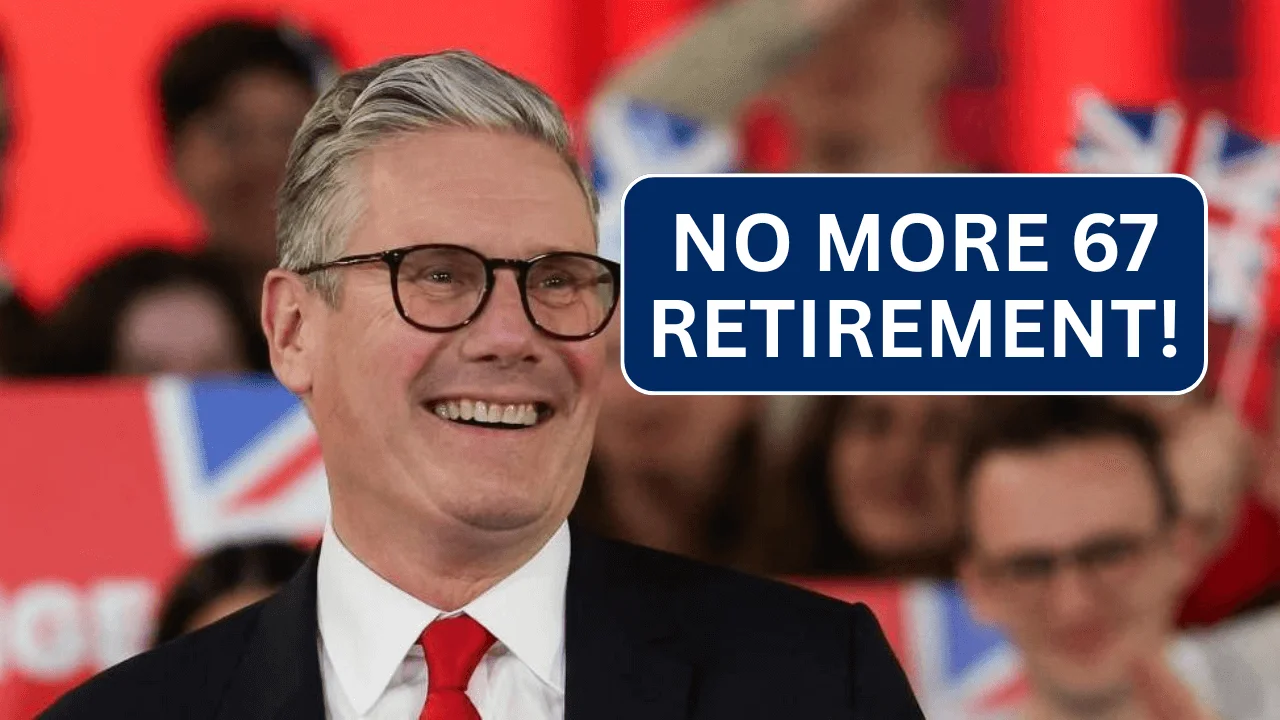
For years, many workers across the UK planned their retirement around one clear milestone: age 67. It became the benchmark. The point at which State Pension payments would begin. The age many structured their savings, mortgage repayments and workplace pension withdrawals around.
Now, that certainty has shifted.
With the UK Government approving a revised State Pension age framework, the long‑standing expectation of retiring at 67 is no longer guaranteed for everyone. While current pensioners will not be affected, younger generations may find themselves working longer before receiving their State Pension.
Here’s a clear, practical breakdown of what’s changing, who is affected and what it means for your retirement plans.
What Has Actually Changed
The approved update relates to the future schedule of the State Pension age.
Previously, legislation gradually increased the pension age:
From 65 to 66
Then toward 67
With further increases to 68 under review
Under the newly approved framework, the age‑67 benchmark is no longer considered a long‑term endpoint. The timetable for future increases has been confirmed and may accelerate depending on demographic and economic data.
Importantly, the State Pension itself is not being removed or reduced. The change affects when you can begin claiming it.
Why the Government Is Raising the Pension Age
The system is overseen by the Department for Work and Pensions, which regularly reviews pension sustainability.
There are several reasons for the adjustment:
People are living longer
More retirees are drawing pensions for extended periods
The working‑age population is growing more slowly
Public spending pressures remain high
When the State Pension was introduced decades ago, average life expectancy after retirement was far lower than today. Policymakers argue that gradual increases are necessary to maintain fairness between generations.
Who Will Not Be Affected
If you are already receiving your State Pension, nothing changes.
If you are within a few years of reaching 66 or 67, you are also unlikely to see any alteration to your planned retirement date.
The biggest impact will be felt by:
People currently in their 40s
People in their early 50s
Younger workers planning long‑term retirement
Your exact State Pension age depends on your date of birth, not your current age alone.
What the New Timeline Means
Although 67 was once seen as the standard retirement age, the updated framework prepares the system for a gradual shift beyond that.
For some birth cohorts, eligibility may move closer to 68.
This does not happen overnight. Changes are phased in gradually to allow people time to prepare.
However, even a one‑year delay can have a noticeable financial impact.
Financial Impact of Delaying Retirement
If your State Pension age rises from 67 to 68, you would face:
One extra year without State Pension income
Additional reliance on private savings
Potential need to continue working
For many households, that extra year matters significantly.
The State Pension currently forms a substantial portion of retirement income for millions of people. Delaying access means careful planning becomes even more important.
What Happens to the Triple Lock
The State Pension is protected by the triple lock system.
This guarantees annual increases based on whichever is highest:
Inflation
Average earnings growth
2.5 percent
The triple lock applies to payment levels, not eligibility age.
So even if the age changes, the uprating mechanism remains separate.
Impact on Workplace Pensions
Workplace pensions operate under different rules.
Most defined contribution pensions can currently be accessed from age 55, rising to 57 in future years.
However, if the State Pension age moves later, you may need your private pension to stretch further.
That could mean:
Adjusting withdrawal amounts
Working part‑time during the gap
Increasing contributions now
Coordination between State Pension age and private pension access becomes increasingly important.
Health and Occupation Considerations
One of the most debated aspects of pension age reform is fairness.
Life expectancy varies significantly depending on:
Region
Income level
Occupation
Health status
A manual labourer in a physically demanding role may find working until 68 far more challenging than someone in a desk‑based profession.
These differences often fuel public debate around pension reform.
Is Early Access Possible
There is currently no standard system allowing early access to the State Pension at a reduced rate.
You must wait until you reach your official State Pension age to claim.
If you cannot work due to health issues before reaching pension age, alternative benefits may be available depending on circumstances.
What Younger Workers Should Do Now
If retirement still feels decades away, it can be tempting to ignore pension changes.
However, early planning provides flexibility.
Consider:
Checking your National Insurance record
Reviewing your State Pension forecast
Increasing workplace pension contributions
Exploring long‑term savings options
Even small additional contributions made earlier in life can compound significantly over time.
Political Debate Around Pension Age
Raising the pension age is never politically simple.
Supporters argue:
It reflects longer life expectancy
It keeps the system affordable
It protects younger taxpayers
Critics argue:
Not all workers can extend careers easily
Health inequalities mean some lose out
Manual occupations face disproportionate impact
Balancing sustainability and fairness remains an ongoing challenge.
What Is Not Changing
Several key elements remain intact:
The State Pension continues to exist
National Insurance contribution requirements remain
Triple lock uprating still applies
Payment frequency is unchanged
The only confirmed shift concerns the age of eligibility for certain generations.
Mixed Reactions From the Public
Some workers accept gradual pension age increases as inevitable.
Others feel retirement is moving further out of reach.
Much depends on individual circumstances, including:
Access to private savings
Health
Job flexibility
Family responsibilities
For some, working longer is manageable. For others, it presents serious challenges.
Checking Your Own Pension Age
The most reliable way to confirm your expected retirement age is through an official State Pension forecast.
This provides:
Your current qualifying years
Your projected pension amount
Your expected pension age
Assumptions based on headlines can sometimes be misleading, so personalised information is essential.
Common Questions
Is retirement at 67 completely gone
For some younger workers, yes — eligibility may move beyond 67.
Is the State Pension being cut
No, only the age of access is changing.
Will it definitely rise to 68
Future increases are scheduled but phased in gradually.
Do I need to take action now
Not immediately, but reviewing your long‑term plan is wise.
Planning for a Longer Working Life
If retirement shifts later, strategies may include:
Phased retirement
Part‑time work
Flexible employment
Boosting private savings
Reducing debt before pension age
The earlier you adapt your plan, the smoother the transition will be.
Key Points to Remember
The 67 benchmark is no longer fixed for everyone.
Current pensioners are unaffected.
Younger workers may retire later than expected.
The State Pension system remains intact.
Forward planning is essential.
Final Thoughts
Saying goodbye to retiring at 67 may feel like a significant moment. For many people, it reshapes expectations about when working life truly ends.
But the bigger picture is about sustainability. As life expectancy increases and the population ages, adjustments to pension age become part of long‑term planning for the country as a whole.
For individuals, the message is clear: understanding your personal pension timeline is more important than ever. Retirement may come slightly later for some generations, but with careful preparation, stability and security remain achievable.
The rules may evolve — but informed planning remains the most powerful tool you have.